
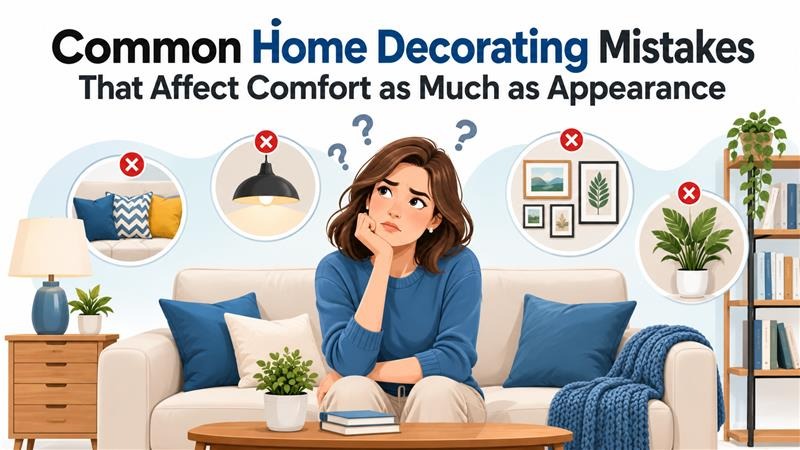
A room can look perfect in photos and still feel wrong. Many homeowners chase style and forget how a space actually feels. Home decorating mistakes often hide in plain sight. They show up as glare, cold floors, echoing walls, and restless nights. This guide covers the most common errors. You will also find simple fixes that improve both looks and comfort.
Why Do Home Decorating Mistakes Hurt Comfort?
Home decorating mistakes hurt comfort because they ignore light, sound, temperature, and movement. A room that only looks good often feels tiring to live in.
Comfort comes from how your senses respond to a space. Eyes react to glare. Ears notice echo. Feet feel cold tiles. Your body registers all of it, even when you never name it.
Good design balances four things:
- Light that suits every time of day
- Textures that feel warm and soft
- Sound that stays calm and absorbed
- Layouts that make movement easy
Keep these in mind as you read. Each mistake below breaks at least one of them.
Are You Choosing Window Coverings Based on Looks Alone?
Yes, many people do, and it costs them sleep and comfort. Sheer curtains look airy, but they let in streetlight and early sun.
Why Bedrooms Need Real Light Control
Darkness helps your body produce melatonin. Even weak light can break your sleep. Parents of young children know this well. Shift workers feel it even more. Daytime naps need a dark room too.
What to Look for in Blackout Blinds
Not all blackout blinds perform equally. Gaps at the edges leak light. Thin fabric lets a glow through. Before you buy, run through this quick list:
- Truly opaque fabric, so no glow slips through
- A close fit at the edges, because gaps let light leak in
- Thermal backing, which helps on cold winter nights
- A cleaning routine you can actually keep up with
Good blackout blinds do more than darken a room. They hold in heat and take the edge off street noise, suiting bedrooms, nurseries, and home offices well.
Why Do Entryways and Floors Cause So Many Problems?
Entryways cause problems because they take the most wear and set the tone for your home. Many people treat them as an afterthought.
Skipping Indoor Mats at the Door
Dirt, water, and grit travel inside on shoes. Without indoor mats, they spread across floors and rugs. Cleaning becomes constant. Wet floors also create slip risks.
Good indoor mats trap moisture and debris right at the threshold. They protect your flooring and keep the air cleaner. Look for absorbent fabric and a non-slip backing.
Leaving Hard Floors Bare
Tile and wood look sleek but feel cold underfoot. Bare floors also bounce sound around the room. A rug in the living room solves both problems. A runner in the hallway does the same.
Choosing the Wrong Rug Size
A tiny rug floats awkwardly in the middle of a room. Furniture should sit at least partly on it. This anchors the space and adds warmth.
Does Poor Lighting Make a Room Feel Uncomfortable?
Yes, it does. Poor lighting is one of the easiest home decorating mistakes to miss. It can leave you squinting, drained, or strangely flat by evening.
Relying on One Overhead Light
A single ceiling fixture creates harsh shadows. Layer your lighting instead. Combine ambient, task, and accent sources. Table lamps and wall lights add softness. Dimmers give you control through the evening.
Ignoring Bulb Colour
Cool white bulbs feel clinical in living rooms. Warm tones around 2700K feel relaxed and inviting. Brighter, cooler light works better in kitchens and workspaces. Always match the bulb to the room’s purpose.
How Does Furniture Layout Affect Comfort?
Your layout controls how easily you move, chat, and unwind. Get it wrong, and the room feels awkward even if every piece is lovely.
Pushing Everything Against the Walls
It seems tidy, but it kills conversation. Float sofas closer together instead. Create a clear seating group that faces inward.
Buying Oversized Pieces
Big sofas overwhelm small rooms—measure before you buy. Leave at least 75 cm for walkways. Seat depth and height matter more than style. Test furniture in person whenever possible.
Can Too Many Hard Surfaces Make a Home Feel Cold?
Yes, hard surfaces reflect sound and feel cold, even with the heating on. Glass, tile, and bare walls all contribute.
Soften the space with layers. Fabric absorbs echo and adds visual warmth. Plants help too, because they break up sharp edges.
Try these quick fixes:
- Add a textured throw to the sofa
- Hang lined curtains on bare windows
- Place a rug under the dining table
- Use fabric panels or soft wall art
Do Paint Colours and Trends Change How a Room Feels?
Yes, colour changes mood and perceived temperature. Following trends without testing them is a common misstep.
Copying Trends Without Testing
A bold shade may look great online. In your own light, it can feel heavy or harsh. Paint large sample patches. Check them in morning and evening light.
Ignoring Natural Light Direction
North-facing rooms receive cooler light. Warm neutrals balance them well. South-facing rooms handle cooler tones better. Let the light guide your palette.
Is Clutter Really One of the Biggest Home Decorating Mistakes?
Yes, clutter quietly raises stress and makes rooms feel smaller. Your decor should make daily life easier, not harder.
Shelves crammed with ornaments make your eyes work overtime. Crowded corners feel chaotic. Empty surfaces give your gaze somewhere to rest. Choose fewer, better pieces. Add storage that hides everyday items. Baskets, benches, and closed cabinets all help.
How Can You Avoid Home Decorating Mistakes in the Future?
You can avoid home decorating mistakes by planning for function first and style second. Start with how you use each room.
Use a Simple Room Checklist
Ask these questions for every space:
- Is light easy to control?
- Is the floor comfortable and protected?
- Does sound feel calm?
- Can everyone move freely?
Upgrade in Small Steps
You do not need a full makeover. Start with blackout blinds in the bedroom. Add indoor mats at the front door next. Layer your lighting after that. Small changes build a more comfortable home over time.
Conclusion
Remember that comfort and appearance work together. The best rooms look good and feel better. Most home decorating mistakes come from ignoring light, sound, warmth, or flow.
Fix light first with quality blackout blinds. Protect your floors with durable indoor mats. Then soften, layer, and declutter. Your home will look sharper and feel far more relaxed.
